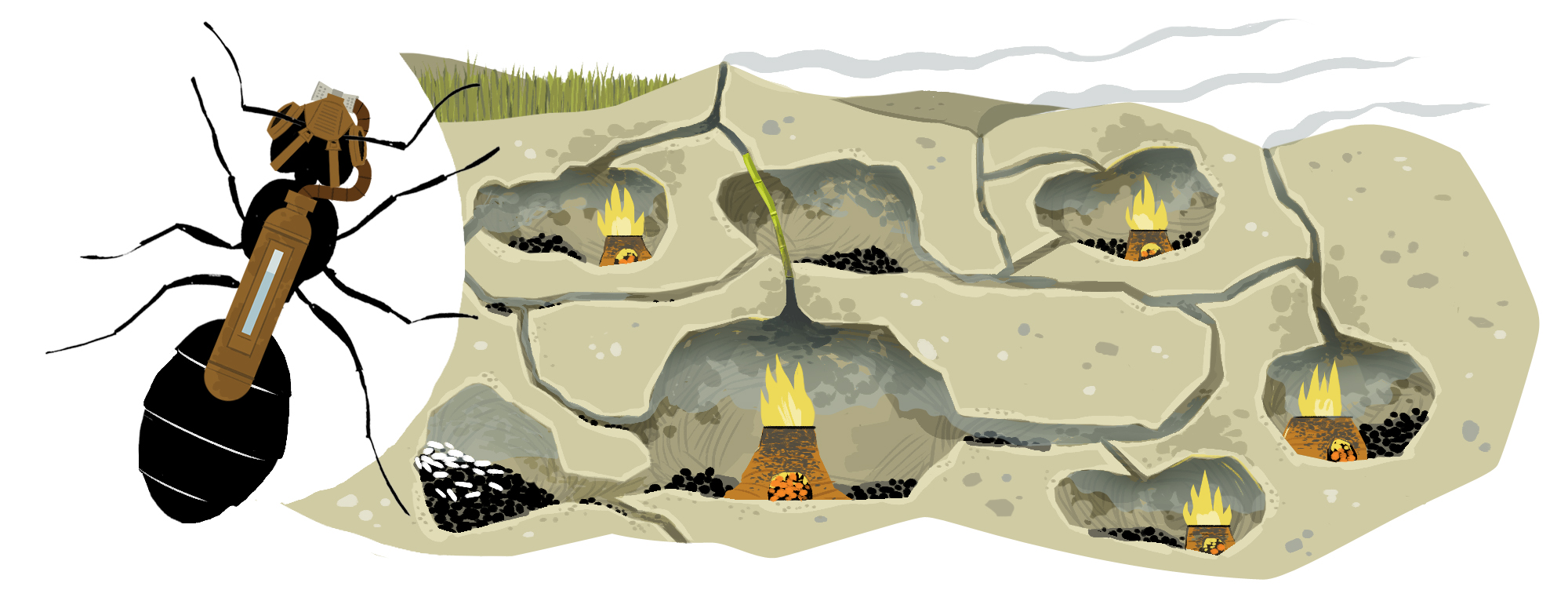
“Privatizing” Space
Companies Shoot for the Stars, but Uncle Sam Still Pays the Bills
by Konstantin Kakaes
Later this week, a Falcon 9 rocket built by SpaceX, a young company founded by Elon Musk, is scheduled to launch from Cape Canaveral in Florida. The rocket will carry a Dragon capsule, also built by SpaceX, to the International Space Station. This is being hailed as a conspicuously important achievement because SpaceX, which Musk founded in 2002 with money from his share of PayPal, is a private company. The temptation to celebrate the privatization of space exploration—the unleashing of all those entrepreneurial billionaires to take us where we haven’t been before—is understandable. But it’s also misguided.
Uncle Sam is still the indispensable player in ... READ MORE
Face It, You Love Snooki Pix
Why Do We Crave What the Paparazzi Have To Offer?
If you’ve never picked up an Us Weekly or Star, then you must be an eccentric, a liar, or a North Korean. Tabloid photos of the rich and famous filling their cars with gas or sunning themselves in the Caribbean reliably interest most of us, even though we feel we ought to know better. We know paparazzi produce their images by disgraceful means, but we can’t resist the product. Why not? In advance of the Zócalo event ...
features
NEXUS
The Mexican Who Would Be Dickens
When the Mexican novelist and essayist Carlos Fuentes, who died May 15, visited Zócalo for an interview with Andrés Martinez in the fall of 2007, he talked about place, and places.
Los Angeles, he said, was a “confusing and beautiful” city that left him disoriented, puzzled,
WALK LIKE AN AMERICAN
The Austrian Texan
by Constantino Diaz-Duran
Christine’s humble cabin bakes in the Texas sun, 12 miles west of the town of Brenham. At 62, she scrapes by with an income of less than $1,000 a month, and her home is testament to her poverty. Her generosity, however, is great. She took me in for a couple of nights, shared her homemade wine with me, and we ...
GLIMPSES
New Border Order
The line between Mexico and the United States tells remarkable tales, even for a border. By global standards, Mexico is a middle-income nation, but nowhere else in the world are two economies of such contrasting living standards separated by a 2,000-mile boundary. Nor is any other border shifted by territorial conquest ...
THE TAKEAWAY
Red Star Over Boeing
Even after six years of living in China, journalist James Fallows, national correspondent for The Atlantic and author of China Airborne, can only guess where the country is going next. Life in China is characterized by unknowability about the future and contradictions in the present, Fallows told a crowd at the RAND ...
Your Heart Attack Ringtone
Cardiologist Eric Topol predicts that one day our smartphones will be able to tell us when we are about to develop a heart attack, when the first cancer cell enters our bloodstream, or when a Type 1 diabetes diagnosis is in our future.
READ MORE
About Zócalo Public Square
Zócalo Public Square, a project of the Center for Social Cohesion, is a living magazine, an innovative blend of on-the-ground events and on-line journalism, that connects people to ideas and to each other in an open, accessible, non-partisan and broad-minded spirit. Through our web publication, lectures, panels, screenings, and conferences, Zócalo explores ideas that enhance our understanding of citizenship and community—the forces that strengthen or undermine human connectedness and social cohesion.
We believe that over specialization and narrowcasting undermine the public square and are committed to welcoming a new, young and diverse generation to the conversation.
Established in Los Angeles in 2003, Zócalo roams across L.A. and Phoenix, and has traveled to Chicago, New Orleans, San Francisco, and as far as Shanghai, Berlin and Guadalajara. In our nine years, we have featured over 1,000 compelling thinkers and doers from a wide range of fields—politics, governance, humanities, health, economics, education, technology, foreign policy, arts, science and beyond—who explore how we see and relate to one another, be it locally, regionally, nationally, or globally.